In today’s digital world, companies rely heavily on technology to work faster and smarter. Businesses want better systems, faster communication, and smoother operations. This is where technology enablement becomes important.
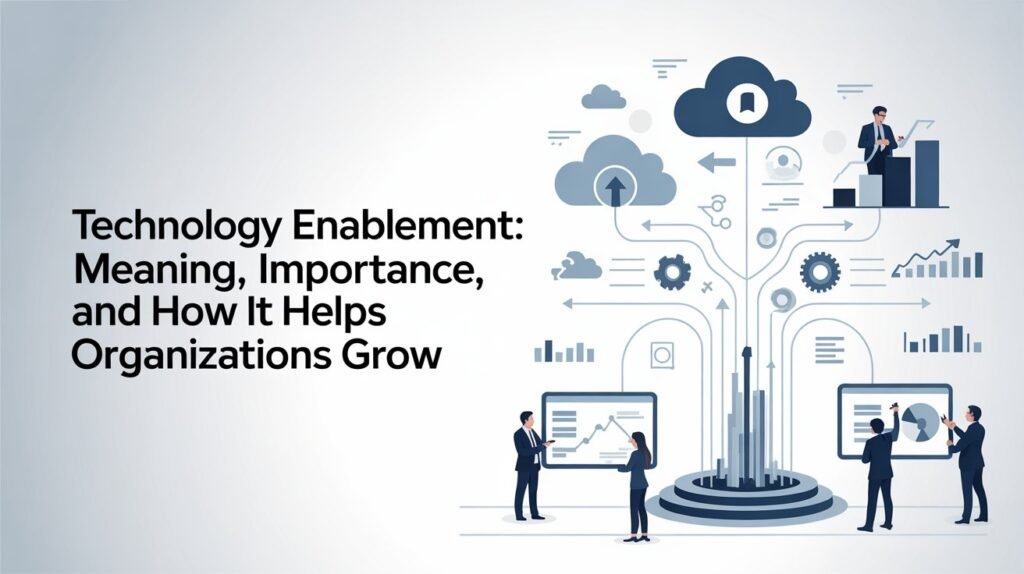
Technology enablement is the process of using modern tools, software, and systems to help people and organizations perform their tasks more efficiently. It connects business goals with the right digital solutions.
Many companies invest in digital transformation, automation tools, and cloud platforms to improve their workflow. These solutions help employees work better, reduce manual tasks, and improve productivity.
In this guide, we will explain what technology enablement is, its meaning, types, benefits, and how organizations use it to grow and stay competitive.
What Is Technology Enablement?
Technology enablement refers to the use of digital tools and technologies that help individuals or organizations achieve their goals more effectively.
In simple terms, it means providing people with the right technology resources, such as software, platforms, or systems, so they can do their work easily.
For example:
- A company using cloud computing to store and access data from anywhere.
- A sales team using CRM software to manage customer relationships.
- A factory using automation technology to speed up production.
All these examples show how technology enablement improves efficiency and productivity.
The goal is not just to adopt technology but to enable employees and teams to use it effectively.
What Is the Meaning of Enablement?
To understand technology enablement, it is important to first understand the meaning of enablement.
The word enablement means giving someone the ability, tools, or resources to perform a task successfully.
In business environments, enablement focuses on providing support systems that help employees perform better.
Examples include:
- Training employees to use new tools
- Providing access to digital platforms
- Improving workflows through technology
- Offering systems that simplify complex processes
So, enablement means empowering people with resources and knowledge so they can achieve better results.
When technology is involved in this process, it becomes technology enablement.
Why Technology Enablement Is Important
Modern organizations cannot grow without the support of technology. Businesses face intense competition, fast-changing markets, and increasing customer expectations.
Technology enablement helps organizations adapt to these challenges.
Here are some major reasons why it is important.
1. Improves Productivity
When employees have access to the right tools, they can complete tasks faster.
For example, automation software, project management tools, and digital collaboration platforms reduce manual work and increase efficiency.
This leads to better performance and faster results.
2. Enhances Collaboration
Teams often work from different locations. Technology makes communication easier.
Tools such as video conferencing platforms, team collaboration software, and cloud-based document systems allow employees to work together smoothly.
This improves teamwork and decision-making.
3. Supports Digital Transformation
Most organizations are moving toward digital transformation strategies.
Technology enablement plays a key role in this shift by helping businesses adopt modern systems like:
- Artificial intelligence
- Data analytics platforms
- Cloud infrastructure
- Business intelligence tools
These technologies help organizations make smarter decisions.
4. Improves Customer Experience
Technology also helps companies serve customers better.
For example:
- Chatbots provide instant customer support.
- Customer relationship management systems (CRM) track customer interactions.
- Data analytics helps businesses understand customer needs.
These improvements lead to better customer satisfaction.
Operational Enablement in Organizations
Another important concept related to technology enablement is operational enablement.
Operational enablement focuses on improving internal business operations by providing tools, systems, and processes that help teams work more efficiently.
It ensures that every department has the resources needed to perform its tasks effectively.
Examples of operational enablement strategies include:
- Implementing workflow automation systems
- Using enterprise resource planning (ERP) software
- Providing data-driven dashboards for decision-making
- Improving process management tools
These technologies simplify operations and reduce errors.
When organizations combine operational enablement with technology enablement, they create a highly efficient business environment.
Key Components of Technology Enablement
Successful technology enablement requires several important components.
Organizations must focus on these elements to get the best results.
Technology Infrastructure
A strong technology infrastructure is the foundation of technology enablement.
This includes:
- Cloud platforms
- Servers and databases
- Networking systems
- Cybersecurity solutions
Without a reliable infrastructure, digital systems cannot function properly.
Digital Tools and Software
Businesses need the right tools to support their processes.
Examples include:
- Customer relationship management software
- Project management platforms
- Data analytics tools
- Automation systems
These tools allow employees to perform tasks quickly and accurately.
Training and Skill Development
Technology alone is not enough.
Employees must know how to use it.
Organizations often provide technology training programs, digital skill development courses, and software tutorials to ensure employees can use systems effectively.
This improves adoption and productivity.
Data Management and Analytics
Data plays a major role in modern businesses.
Technology enablement helps companies collect, store, and analyze large amounts of information.
Using data analytics platforms, organizations can identify trends, measure performance, and make better decisions.
Examples of Technology Enablement in Real Life
Technology enablement can be seen in many industries.
Different sectors use technology to improve their operations.
Healthcare Industry
Hospitals and healthcare providers use electronic health records (EHR) and telemedicine platforms to improve patient care.
Doctors can access medical records quickly and provide remote consultations.
Education Sector
Schools and universities use online learning platforms, virtual classrooms, and digital course management systems.
These tools allow students to learn from anywhere.
Retail Businesses
Retail companies use inventory management software, online payment systems, and e-commerce platforms to improve customer experience.
Technology helps them track sales and manage stock efficiently.
Manufacturing Industry
Factories use automation systems, robotics, and industrial IoT technology to increase production speed and reduce errors.
These solutions improve operational efficiency.
Benefits of Technology Enablement
Organizations that implement technology enablement enjoy many benefits.
Below are some key advantages.
Increased Efficiency
Technology automates repetitive tasks. Employees spend less time on manual work.
This improves overall efficiency.
Better Decision Making
Businesses can use data analytics tools and business intelligence systems to analyze information.
This allows managers to make smarter decisions.
Cost Reduction
Automation and digital tools reduce operational costs.
Companies can save money by minimizing errors and improving workflow efficiency.
Improved Innovation
Technology encourages creativity and innovation.
Teams can experiment with new ideas and create better solutions.
Stronger Competitive Advantage
Organizations that adopt technology quickly can stay ahead of competitors.
They can launch products faster and respond to market changes more effectively.
Challenges of Technology Enablement
Although technology enablement offers many benefits, organizations may also face challenges.
Understanding these challenges helps businesses prepare better.
Resistance to Change
Some employees may hesitate to adopt new technologies.
They may feel uncomfortable learning new systems.
Companies must provide proper training and support.
Implementation Costs
Setting up digital systems and infrastructure can require significant investment.
However, the long-term benefits often outweigh the initial costs.
Cybersecurity Risks
Digital systems may face cybersecurity threats, data breaches, and network vulnerabilities.
Organizations must invest in strong security systems to protect sensitive information.
Integration Issues
Sometimes new technologies may not easily integrate with existing systems.
Companies need proper planning and technical expertise to solve these problems.
Best Practices for Successful Technology Enablement
Organizations can maximize the benefits of technology enablement by following certain best practices.
Develop a Clear Strategy
Businesses should create a clear technology enablement strategy aligned with their goals.
This helps ensure that technology investments deliver value.
Focus on User Experience
Technology must be easy to use.
Simple and user-friendly systems encourage employees to adopt them quickly.
Provide Continuous Training
Employees should receive regular training to improve their digital skills.
Training helps them use technology confidently.
Monitor and Improve Systems
Organizations should continuously monitor their technology systems.
Regular updates and improvements keep systems efficient and secure.
Future of Technology Enablement
Technology continues to evolve rapidly.
In the future, technology enablement will become even more important.
Emerging technologies will play a bigger role, including:
- Artificial intelligence
- Machine learning systems
- Blockchain technology
- Internet of Things (IoT)
- Advanced automation tools
These innovations will transform industries and create new opportunities for businesses.
Organizations that adopt these technologies early will gain a strong advantage.
Conclusion
Technology enablement is a powerful concept that helps organizations work smarter and more efficiently. It focuses on providing the right digital tools, systems, and training so employees can perform their tasks effectively.
Understanding what tech enablement is, the meaning of enablement, and the role of operational enablement helps organizations build stronger systems and better workflows.
Companies that invest in modern technology infrastructure, digital tools, and employee training can improve productivity, reduce costs, and enhance customer experience.
As technology continues to evolve, businesses must focus on technology enablement strategies to remain competitive and successful in the digital age.