The US-China technology competition has become one of the most important global issues in recent years. The United States and China are both powerful countries with advanced technology industries. Their rivalry affects global trade, innovation, and economic growth.
Many business leaders and economists often discuss this competition. One of the most notable voices is Jamie Dimon, the CEO of JPMorgan Chase. Dimon has spoken publicly about the importance of technology leadership and the impact of geopolitical tensions between the United States and China.
The debate around china technology vs us is not just about innovation. It also involves national security, supply chains, and global influence. Governments are introducing policies such as us china chip export controls and restrictions on advanced semiconductor technology.
In this article, we will explore the US-China technology competition, what business leaders like Jamie Dimon say about it, and how policies like the U.S. semiconductor ban on China are shaping the future of technology.
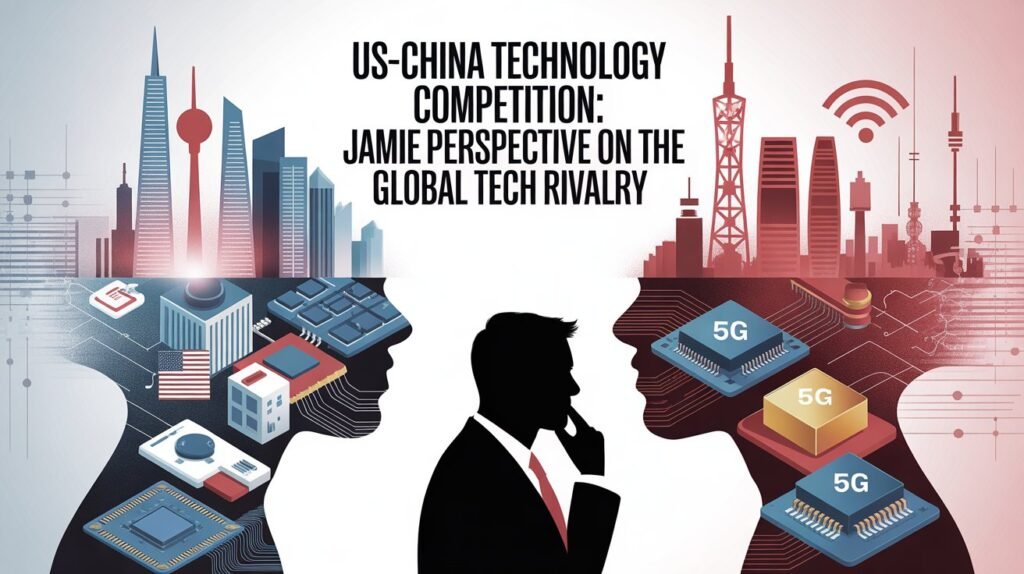
Understanding the US-China Technology Competition
The US-China technology competition refers to the race between the two countries to lead the world in advanced technologies.
These technologies include:
- Artificial intelligence
- Semiconductor manufacturing
- Cloud computing
- 5G networks
- Quantum computing
Both countries invest billions of dollars every year to develop these technologies.
The competition has intensified because technology now plays a critical role in economic power and national security. Countries that lead in innovation can influence global markets and supply chains.
This is why the discussion about china technology vs us has become a central topic in international economics and politics.
Jamie Dimon’s View on the US-China Technology Rivalry
Jamie Dimon has frequently commented on global economic issues, including the growing US-China technology competition.
As the leader of JPMorgan Chase, one of the largest banks in the world, Dimon closely watches global economic trends.
Dimon has emphasized that the competition between the United States and China will likely continue for many years.
He has also pointed out that technological leadership is essential for economic strength. According to Dimon, countries that lead in innovation and research will have greater influence over the global economy.
At the same time, Dimon has suggested that cooperation between major economies remains important for global stability.
His comments highlight the complex balance between economic competition and international collaboration.
China Technology vs US: A Global Innovation Race
The comparison between china technology vs us often focuses on innovation, research investment, and technology infrastructure.
Both countries have made significant progress in different areas of technology.
United States Technology Strengths
The United States has long been a leader in technology innovation.
Many of the world’s largest technology companies are based in the United States.
Examples include:
- Apple
- Microsoft
- Google
- NVIDIA
These companies drive innovation in areas such as artificial intelligence, cloud computing, and semiconductor design.
The U.S. also has strong research universities and venture capital networks that support technology startups.
These advantages contribute to American leadership in advanced technology industries.
China’s Rapid Technology Growth
China has made remarkable progress in technology development over the past two decades.
The Chinese government invests heavily in technology research and innovation programs.
Major Chinese technology companies include:
- Huawei
- Tencent
- Alibaba Group
These companies play a major role in China’s digital economy.
China is also rapidly expanding its capabilities in artificial intelligence, 5G networks, and electric vehicle technologies.
This growth has intensified the global debate about china technology vs us leadership.
The Importance of Semiconductor Technology
One of the most critical areas in the US-China technology competition is semiconductor manufacturing.
Semiconductors, also known as computer chips, power almost every modern device.
These chips are used in:
- Smartphones
- Computers
- Cars
- Artificial intelligence systems
Because semiconductors are essential for modern technology, they have become a major focus of global competition.
Countries that control semiconductor technology gain significant economic and strategic advantages.
US China Chip Export Controls Explained
In recent years, the United States has introduced US China chip export controls.
These policies restrict the export of certain advanced semiconductor technologies to China.
The goal of these controls is to limit China’s access to cutting-edge chip manufacturing tools.
Companies affected by these rules include major semiconductor firms such as:
- Intel
- Advanced Micro Devices
- NVIDIA
These companies produce advanced processors used in artificial intelligence and high-performance computing.
The us china chip export controls are part of a broader strategy to protect technological leadership.
The U.S. Semiconductor Ban on China
The U.S. semiconductor ban on China is closely related to export controls.
The policy restricts China’s ability to purchase certain advanced semiconductor equipment and chips.
This includes tools used for manufacturing extremely small and powerful microchips.
The United States government believes these restrictions are necessary for national security.
Supporters argue that advanced chips could be used in military technologies.
However, critics say the u.s. semiconductor ban china could disrupt global supply chains and increase tensions between the two countries.
Impact of the Technology Competition on Global Markets
The US-China technology competition affects many industries and markets around the world.
Companies must navigate complex regulations, supply chain disruptions, and geopolitical risks.
Supply Chain Changes
Many technology companies are diversifying their supply chains.
Instead of relying on a single country, companies are expanding manufacturing to multiple regions.
This trend is often called global technology supply chain diversification.
Increased Investment in Innovation
Both the United States and China are increasing funding for research and development.
Governments are supporting industries such as:
- Artificial intelligence
- Semiconductor manufacturing
- Quantum computing
These investments accelerate global technological innovation.
How Businesses Are Responding
Large corporations are closely watching the china technology vs us competition.
Companies must adapt to changing regulations and market conditions.
Many technology firms are investing in new research centers and expanding global partnerships.
Financial institutions like JPMorgan Chase also analyze these trends to understand how geopolitical issues affect global markets.
Business leaders, including Jamie Dimon, often stress the importance of stability and cooperation in global trade.
The Future of the US-China Technology Competition
Experts believe the US-China technology competition will continue for many years.
Technology will remain a key factor in global economic leadership.
Several trends may shape the future of this rivalry.
Growth of Artificial Intelligence
Artificial intelligence is becoming one of the most important technologies in the world.
Both countries are investing heavily in AI research and development.
The country that leads in AI may gain significant economic advantages.
Expansion of Semiconductor Manufacturing
Governments are encouraging domestic semiconductor production.
The United States has introduced policies to increase chip manufacturing at home.
China is also investing heavily in domestic semiconductor production.
Increasing Global Collaboration
Despite competition, international cooperation remains important.
Many technology projects involve researchers and companies from multiple countries.
Balancing competition and collaboration will be an important challenge.
Conclusion
The US-China technology competition represents one of the most significant global challenges of the modern era.
The rivalry involves innovation, economic influence, and national security.
Policies such as US China chip export controls and the U.S. semiconductor ban on China highlight how technology has become a strategic priority for governments.
Business leaders like Jamie Dimon have emphasized that technological leadership will shape the future of global economies.
At the same time, the competition between china technology vs us is likely to continue evolving as both countries invest heavily in research and innovation.
As the world becomes increasingly digital, technology will remain a central factor in global economic power and international relations.
Understanding the dynamics of this competition helps businesses, governments, and individuals prepare for the future of the global technology landscape.