Solar energy is becoming one of the most popular renewable energy sources in the world. As solar technology improves, engineers continue to develop new designs that make solar panels more efficient and durable. One of the most interesting innovations in recent years is shingled technology.
This technology is used to create shingled solar panels, which are designed differently from traditional solar panels. Instead of large square cells placed with gaps between them, these panels use overlapping solar cells arranged like roof shingles.
Because of this design, shingled solar panels can produce more electricity and use space more efficiently.
In this article, we will explain shingled technology, how shingled solar panel systems work, their benefits, and why they are becoming an important part of modern solar energy systems.
What Is Shingled Technology?
A Simple Definition
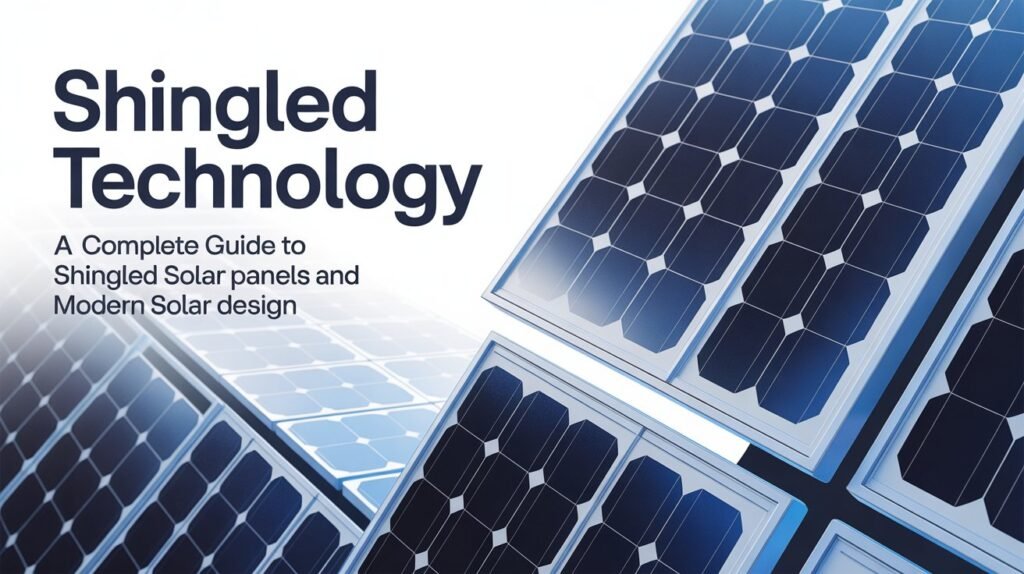
Shingled technology is a solar panel design method where solar cells are cut into thin strips and placed in an overlapping pattern.
This pattern looks similar to the way roof shingles are arranged. That is why the technology is called shingle technology.
Unlike traditional panels that use separate cells with visible gaps, shingled solar panels connect many small solar strips together.
This allows the panel to use more surface area to capture sunlight.
Because of this improved design, shingled solar panel systems can generate more electricity compared to older panel designs.
How Shingled Solar Panels Work
Solar Cells Cut into Strips
Traditional solar panels use large square solar cells.
In shingled solar technology, these cells are cut into narrow strips.
These strips are then placed in overlapping rows.
This creates a compact layout that allows more solar photovoltaic material to fit on the panel.
The result is better use of available space.
Overlapping Cell Structure
The most important feature of shingled solar panels is the overlapping design.
Each strip slightly overlaps the next one.
This overlapping connection reduces unused space between cells.
Because there are fewer gaps, more sunlight is captured by the panel.
This improves solar energy efficiency.
Special Electrical Connections
In traditional solar panels, metal wires connect the cells.
However, shingled solar panel systems use conductive adhesives to connect the strips.
This eliminates large metal busbars that block sunlight.
With fewer metal parts on the surface, the panel absorbs more sunlight and produces more power.
Key Components of Shingled Solar Panel Technology
To understand shingle technology, it is helpful to look at the main components used in the design.
Solar Photovoltaic Cells
The core component of any solar panel is the photovoltaic (PV) cell.
These cells convert sunlight into electricity.
In shingled solar panels, these cells are cut into smaller pieces and arranged in overlapping layers.
This improves the panel’s energy output.
Conductive Adhesive Materials
Instead of traditional soldering wires, shingled solar panels use conductive adhesive materials.
These materials connect the solar strips while allowing electricity to flow through the panel.
This design reduces electrical resistance and improves solar panel performance.
Protective Glass Layer
The top of the panel is covered with a strong tempered glass layer.
This glass protects the solar cells from weather conditions such as:
- Rain
- Snow
- Dust
- Wind
This protection helps maintain the durability of shingled solar panel systems.
Benefits of Shingled Solar Technology
Shingled technology offers many advantages compared to traditional solar panel designs.
These benefits make shingled solar panels attractive for homeowners and businesses.
Higher Energy Efficiency
One of the biggest advantages is improved solar energy efficiency.
Because there are fewer gaps between cells, more sunlight reaches the photovoltaic material.
This allows shingled solar panels to generate more electricity from the same amount of sunlight.
Better Use of Space
Traditional solar panels leave small gaps between cells.
These gaps do not produce electricity.
In shingle technology, the overlapping design removes these spaces.
This means the panel can use almost its entire surface area to generate power.
Improved Shade Performance
Another benefit of shingled solar panels is better performance in partially shaded conditions.
If part of the panel becomes shaded, the rest of the panel can continue producing electricity.
This improves solar panel reliability in real-world environments.
Sleek and Modern Design
Many homeowners prefer the appearance of shingled solar panels.
Because there are fewer visible wires and metal lines, the panels look smoother and darker.
This creates a modern and attractive solar roof design.
Comparison: Shingled Solar Panels vs Traditional Solar Panels
Understanding the differences between traditional panels and shingled solar panels helps explain why the technology is becoming popular.
Cell Layout
Traditional panels use square solar cells placed side by side.
These cells are connected using visible metal wires.
In contrast, shingled solar panels use thin solar strips arranged in overlapping rows.
This reduces gaps and increases the amount of active solar surface area.
Electrical Connections
Traditional panels use metal busbars and wires.
These components block some sunlight.
Shingled solar technology replaces these wires with conductive adhesives.
This allows more sunlight to reach the photovoltaic cells.
Power Output
Because of improved design and reduced shading from wires, shingled solar panels can produce more electricity from the same size panel.
This makes them attractive for homes with limited roof space.
Applications of Shingled Solar Panels
Shingled solar panels can be used in many different environments.
Their efficient design makes them useful for several applications.
Residential Solar Systems
Homeowners often install shingled solar panels on rooftops.
These panels provide clean electricity for household appliances.
The sleek design also blends well with modern home architecture.
Commercial Solar Installations
Businesses with large roofs can install shingled solar systems to reduce energy costs.
Commercial buildings often require large amounts of electricity.
High-efficiency panels help maximize energy production.
Solar Farms
Large solar farms also benefit from advanced solar panel technology.
Using efficient panels allows solar farms to generate more electricity from the same land area.
This improves the overall productivity of solar energy plants.
Durability of Shingled Solar Panels
Durability is an important factor when choosing solar panels.
Solar panels must operate outdoors for many years.
Resistance to Weather
Modern shingled solar panels are designed to withstand harsh weather conditions.
They are tested for:
- Strong winds
- Heavy rain
- Snow loads
- Temperature changes
This ensures long-term solar system reliability.
Reduced Mechanical Stress
Because shingle technology uses flexible adhesive connections instead of rigid wires, the panels may experience less mechanical stress.
This can help prevent micro-cracks in the solar cells.
Micro-cracks are a common cause of solar panel performance loss.
hallenges of Shingled Solar Technology
Although shingled solar technology offers many advantages, there are still some challenges.
Manufacturing Complexity
The process of cutting solar cells into strips and assembling them in overlapping patterns requires advanced manufacturing equipment.
This can increase production complexity compared to traditional panels.
Repair Difficulty
If a shingled solar panel becomes damaged, repairs may be more difficult because of the overlapping cell design.
In some cases, replacing the entire panel may be easier than repairing individual cells.
Limited Awareness
Many consumers are still unfamiliar with shingled solar panels.
Traditional solar panel designs are more widely known.
However, awareness of shingled solar technology is growing as more companies adopt the design.
Future of Shingled Solar Panel Technology
The future of shingle technology looks promising as the demand for renewable energy continues to grow.
Improved Manufacturing Techniques
Solar manufacturers are constantly improving production methods.
This may reduce the cost of shingled solar panels and make them more widely available.
Better manufacturing also improves panel reliability and efficiency.
Integration with Smart Energy Systems
Modern homes are increasingly using smart energy management systems.
These systems monitor electricity usage and optimize solar energy production.
Shingled solar panels can work alongside battery storage and smart grids to create efficient renewable energy systems.
Growth of Sustainable Energy Solutions
As governments and businesses invest in clean energy technology, solar power will play a major role in the global energy transition.
Innovations such as shingled solar panel systems will help improve the efficiency of solar installations worldwide.
Final Thoughts
Shingled technology represents an important advancement in solar panel design. By using overlapping solar cell strips, shingled solar panels can capture more sunlight and produce more electricity than traditional panels.
This innovative shingle technology improves solar energy efficiency, reduces unused panel space, and provides a sleek, modern appearance.
Because of these advantages, shingled solar panel systems are becoming increasingly popular in residential, commercial, and utility-scale solar installations.
While there are still some challenges related to manufacturing complexity and repair processes, the benefits of shingled solar technology make it a promising solution for the future of renewable energy.
As solar power continues to expand around the world, advanced solar panel designs, including shingled solar panels, will help drive the transition toward cleaner and more sustainable energy systems.